A patient's history, rebuilt from the fax pile.
Referral packages arrive as hundreds of scanned pages from a dozen sources, in no order, with duplicates. AirGapped Health rebuilds them into a dated clinical history on a machine inside your clinic. Every fact cites its page, every page is accounted for, and a clinician reviews and signs everything.
Synthetic example
Fax cover sheet
Family practice
Synthetic example
Referral letter
injured at work on 3 March 20XX
Page ledger
Synthetic example
- read
- 10
- unreadable
- 1
- no clinical content
- 3
- accounted for
- 14 of 14
injured at work on 3 March 20XX
Referral letter, p. 2
- Deployment
- An appliance in your server room. No cloud account, no vendor portal.
- Built for
- Ontario clinics and medical-legal assessors working under PHIPA.
- Status
- In development. Not yet available for clinical use.


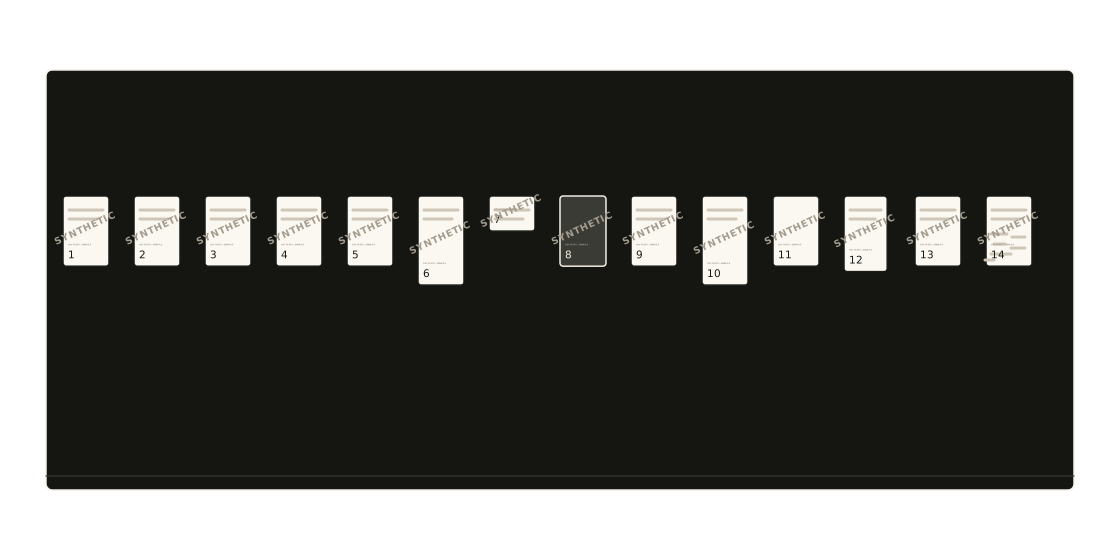
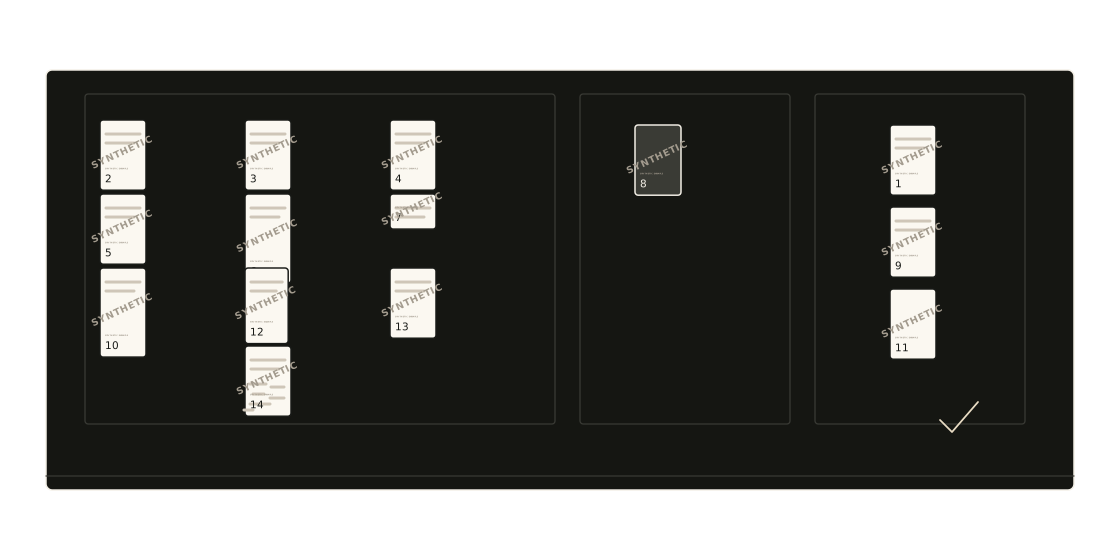
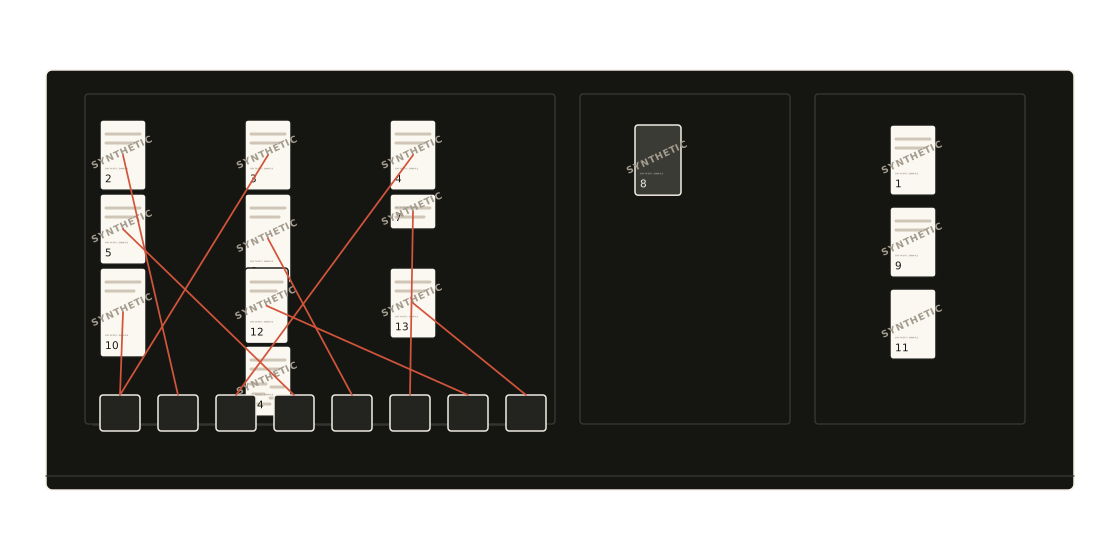
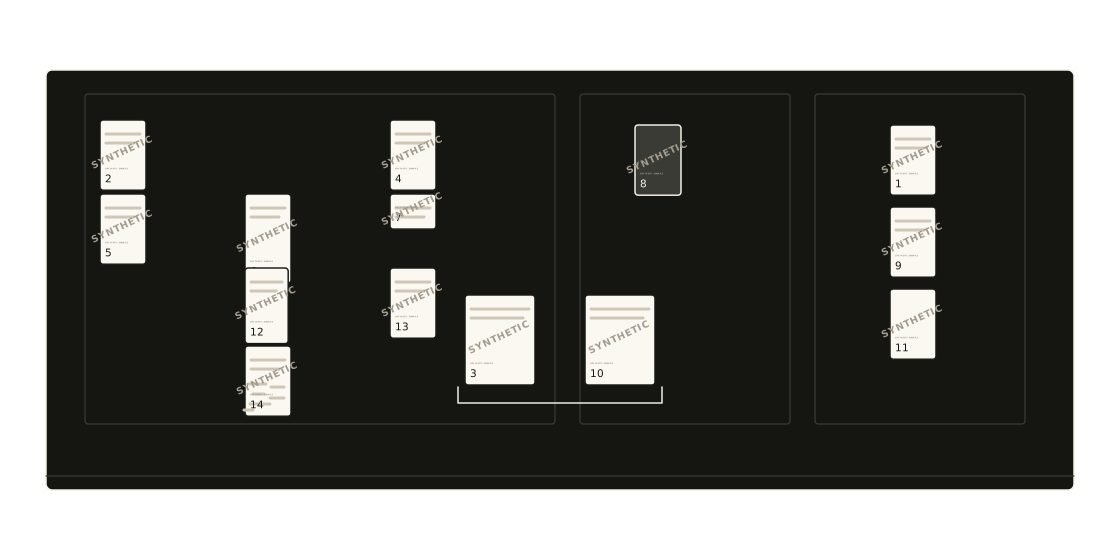
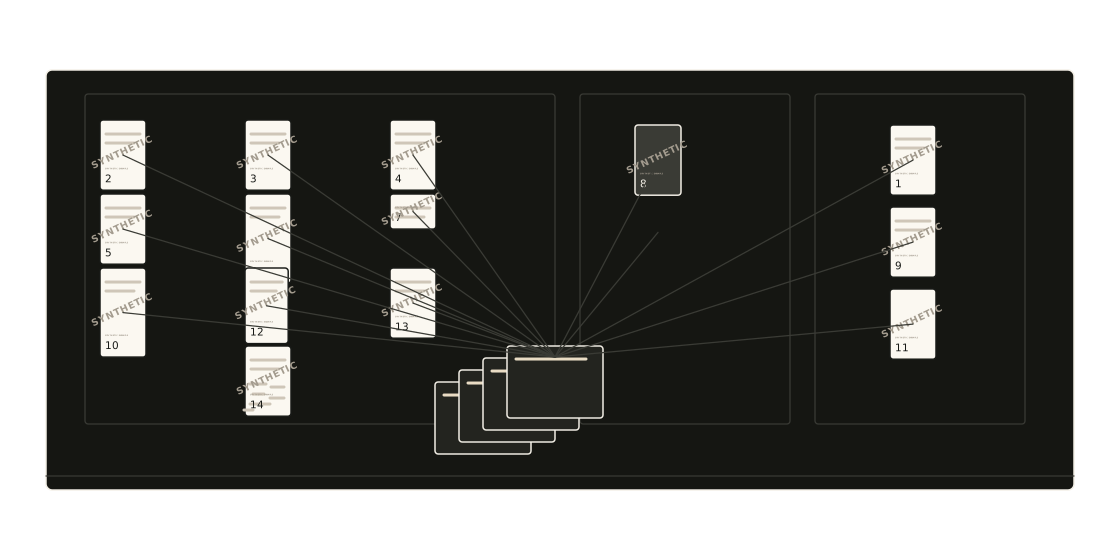

Use the range to take it apartSYNTHETIC EXAMPLE
Use Left and Right to change stages. Alt and arrow keys turn the model. Escape resets its view. The mouse wheel scrolls the page.
14 received in this example. 14 accounted for. ✓
Synthetic example. Fourteen pages, every page accounted for.
Take the full model apart01The problem
Nobody reads all of it
A chronic pain referral can run to several thousand pages: consult letters, imaging reports, medication profiles, the same discharge summary faxed four times from three offices. Somewhere in it is the information that decides what happens next. Somewhere else in it is a page nobody will ever open.
Summarising that pile is easy. Proving you did not drop anything is the hard part, and at a few thousand pages nobody can check the answer by hand. That is the problem this software is built for.
02The mechanism
A pile goes in. A history you can check comes out.
The drawing below is the whole idea. The rest of this site is detail.
A referral package goes in as loose scanned pages. Each page is read and placed in a ledger. What comes out is a dated history in which every entry points back to the page it was taken from. The page that could not be read is listed, not dropped.
Synthetic example03Five commitments
What it holds itself to
A summary tells you what it found. These five are about what it can prove, and they are the whole product.
Synthetic example
Fax cover sheet
Family practice
Synthetic example
Referral letter
injured at work on 3 March 20XX
Synthetic example
Insurer claim form
date of injury 3 May 20XX
Every fact cites its page
Each entry in the history carries the page it came from and the words it rests on. Every quoted line is checked character for character against the page's own recognised text, and shown to the reviewer on the scan it came from.
Every page is accounted for
Each page ends in exactly one place in a ledger, and the result is reported as that ledger rather than as a count. Pages the software could not read are named, not omitted.
Contradictions are shown, not settled
Where the record conflicts with itself, it says so and shows both sides, each with its page. It does not quietly pick a winner.
A named person signs
The output is a reconstruction, not a conclusion. A clinician reviews it, corrects what is wrong, and signs. The signature binds to what was reviewed; if anything changes afterwards, it no longer stands.
Nothing leaves the building
It runs on one machine inside the clinic. No cloud account, no vendor portal, and no outbound connection for any part of the work.
04A worked example
One small case, start to finish
A real package runs to hundreds or thousands of pages. This one is fourteen, so that you can check the arithmetic yourself.
Synthetic example
Fax cover sheet
Family practice
Synthetic example
Referral letter
injured at work on 3 March 20XX
Synthetic example
Insurer claim form
date of injury 3 May 20XX
A
The pile: fourteen pages
As received, in fax order. One unreadable page and three with no clinical content.
- p. 1Fax cover sheetFamily practice
- p. 2Referral letter, page 1Family practice
- p. 3Referral letter, page 2Family practice
- p. 4MRI report, page 1Imaging clinic
- p. 5MRI report, page 2Imaging clinic
- p. 6Pharmacy listPharmacy
- p. 7Lab stripFamily practice
- p. 8Handwritten progress noteFamily practice
- p. 9Fax transmission reportFamily practice
- p. 10Insurer claim formInsurer
- p. 11Blank reverse sideFamily practice
- p. 12Hospital consult letterHospital
- p. 13X-ray reportImaging clinic
- p. 14Page cut off in transmissionEmergency department
B
The history it becomes
In date order, not fax order. Every line ends in the page it came from.
C
One contradiction, shown with both sides
Two documents disagree about the date of injury. The software does not choose. It puts both in front of the reviewer.
injured at work on 3 March 20XX
date of injury 3 May 20XX
D
The signed packet
What the clinician puts their name to, and exactly what that name covers.
- Page ledger
- 10 read1 unreadable3 no clinical content14 of 14 accounted for
- History
- 8 dated events, 9 citations, each with a verified quotation and a page.
- Contradictions
- 1 shown, both sides kept. Resolved by the reviewer, not by the software.
- Reviewed and signed
- A. Reviewer
Synthetic example Every name, date, finding and page in this example is invented. No real patient, clinic or document appears anywhere on this site.
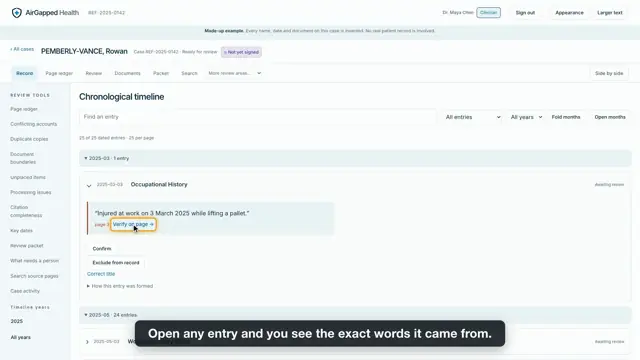
05The demo film
Prefer watching?
The worked example above, as a film with chapters and captions.
06Where it runs
One machine, in the clinic. No cloud. No internet.
Many products in this space are hosted services: the file is uploaded, processed somewhere else, and returned. AirGapped Health runs entirely on hardware inside the clinic, with no outbound connection required for any part of the work.
That is not a feature added to a cloud product. It is the reason the software is built the way it is.
The appliance sits on the clinic's own network and talks only to the clinic's own workstations. There is no line out of the building because the work does not need one.
07What this page does not say
No numbers yet, on purpose
There are no accuracy figures here, and no customer names. The software is in development and its quality has not yet been measured against a real clinical corpus. When those numbers exist they will be published with the corpus they were measured on, and with what that corpus does and does not support.